
Unrivaled Video Resolution and Quality
The world of video production is changing rapidly. Consequently, videographers need tools that can keep up with high demands. The Canon EOS R5 mirrorless camera stands at the forefront of this technological revolution. It offers resolution capabilities that were once unimaginable in a compact body. Specifically, this camera features internal 8K RAW recording. This is a massive leap forward for filmmakers. Most cameras on the market today still struggle to deliver reliable 4K footage. However, Canon has leapfrogged the competition by doubling that resolution. Therefore, the detail captured is simply breathtaking.
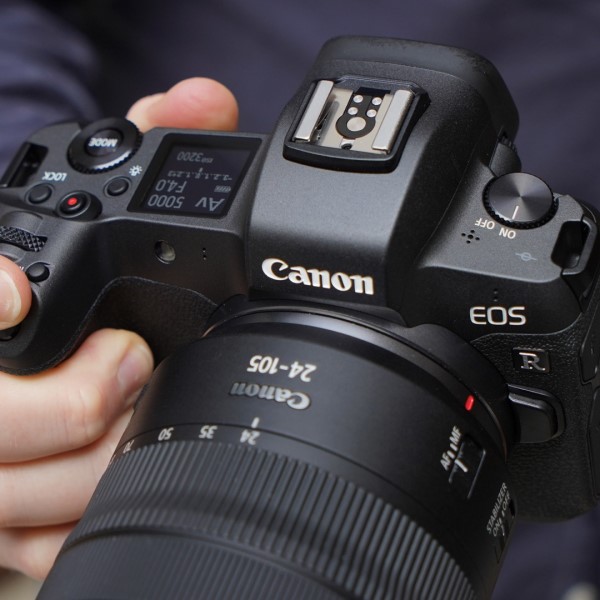
Furthermore, the camera records 8K video at up to 30 frames per second. This allows for incredibly smooth motion. In addition, users can extract high-resolution still images from the video footage. This feature is incredibly useful for sports and wildlife photographers. It ensures that no critical moment is ever missed. Moreover, the camera supports 4K recording at up to 120 frames per second. This is perfect for creating slow-motion sequences. Slow motion adds a dramatic flair to any video project. Consequently, the creative possibilities are virtually endless.
Additionally, the camera utilizes the full width of the sensor for 8K recording. This results in a true cinematic look. Videographers can use their wide-angle lenses without any crop factor. This preserves the artistic integrity of the shot. Also, the 8K footage provides immense flexibility in post-production. Editors can crop in significantly without losing quality. This is particularly useful for reframing shots during the editing process. Thus, the R5 is not just a camera; it is a versatile production tool. It empowers creators to push their boundaries. The image quality is sharp, clear, and full of life. As a result, it sets a new standard for what a hybrid camera can achieve. Any videographer looking for top-tier quality should consider this powerhouse.
Advanced In-Body Image Stabilization
Camera shake has always been a challenge for videographers. Handheld shots often result in shaky, unusable footage. However, the Canon EOS R5 addresses this issue head-on. It features a sophisticated In-Body Image Stabilization (IBIS) system. This system is truly remarkable. It works by physically shifting the image sensor to counteract movement. Consequently, the footage remains steady even when the camera moves. This technology allows videographers to shoot handheld in situations where a tripod was previously necessary.
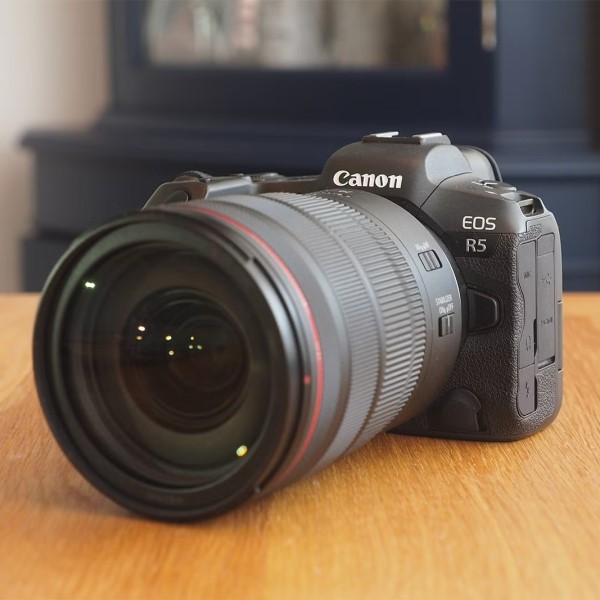
Moreover, the R5 takes stabilization a step further. It offers coordinated stabilization. This means the camera’s IBIS works in tandem with lens-based optical image stabilization. When you attach a stabilized RF lens, the two systems communicate. They work together to provide an astounding level of correction. Canon claims up to 8 stops of shake correction. This is a significant improvement over previous generations. For example, a videographer can walk and run while filming. The resulting footage will still look smooth and professional. Therefore, this opens up new avenues for documentary and run-and-gun style filmmaking.
In addition, the effectiveness of this system reduces the need for bulky gimbals. Gimbals are often heavy and cumbersome. They require power and setup time. By eliminating the need for a gimbal, the R5 streamlines the production process. Videographers can move faster and capture spontaneous moments. Furthermore, the stabilization system has specialized modes. There is a mode specifically for panning. This ensures that horizontal movement is preserved while vertical shake is corrected. Another mode is designed for irregular movement. This intelligently adapts to the videographer’s motion. Thus, the camera becomes an extension of the creator’s body. It delivers reliable performance in almost any shooting scenario. This feature alone makes the R5 a compelling choice for serious videographers.
Exceptional Autofocus Performance for Moving Subjects
Keeping a subject in focus is crucial for video production. However, it can be incredibly difficult with moving subjects. The canon eos r5 mirrorless camera solves this problem with its advanced autofocus system. It features Canon’s renowned Dual Pixel CMOS AF II technology. This system covers approximately 100 percent of the image sensor. Consequently, the camera can track subjects anywhere in the frame. There are no dead zones. This provides videographers with immense confidence. They know their subject will remain sharp.
Furthermore, the autofocus system utilizes deep learning artificial intelligence. The camera can recognize and track specific subjects. For instance, it detects human faces and eyes with incredible accuracy. It even tracks the head. But it does not stop there. The R5 can also identify and track animals. It recognizes birds, dogs, and cats. This feature is a game-changer for wildlife videographers. Previously, tracking a bird in flight required manual focus pulling. Now, the camera does it automatically. Therefore, capturing sharp footage of fast-moving wildlife is much easier.
Moreover, the transition between focus points is smooth and natural. The camera does not “hunt” for focus jerkily. Instead, it shifts focus gently. This mimics the work of a professional focus puller. The speed of the autofocus transition is adjustable. Videographers can set it to be instant or slow. This level of control is essential for storytelling. It allows the viewer’s attention to be guided deliberately. Additionally, the touch screen interface makes selecting focus points intuitive. You simply tap the screen where you want the focus to be. The camera responds instantly. Thus, the R5 allows solo operators to produce complex shots. They do not need a large crew to manage focus. This accessibility empowers independent filmmakers. It ensures that technical limitations never stifle creative vision.
Design and Ergonomics for Professional Use
A camera is more than just its sensor. The way it feels in the hand is equally important. The Canon EOS R5 features a robust and ergonomic design. It is built for long shooting days. The body is constructed from strong magnesium alloy. This ensures durability while keeping the weight manageable. Furthermore, the camera is weather-sealed. This protects the internal components from dust and moisture. Consequently, videographers can shoot in challenging environments without worry. They can capture the story regardless of the weather conditions.
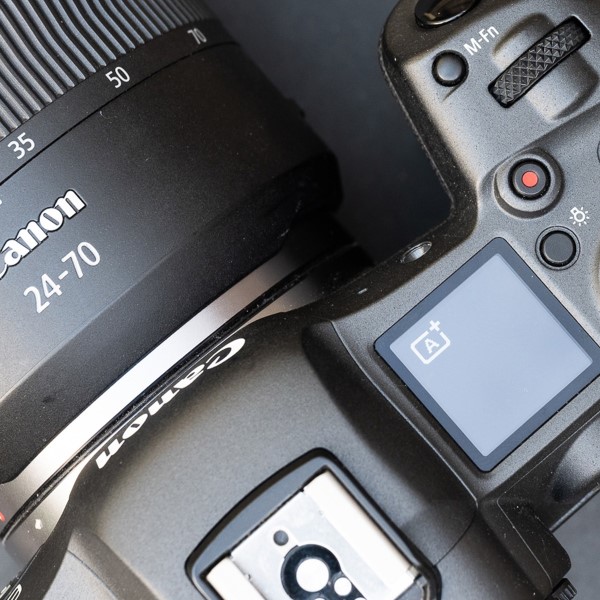
Additionally, the button layout is intuitive and customizable. Every control is within easy reach. The dials and buttons have a satisfying tactile click. This allows videographers to change settings without taking their eyes off the subject. There is also a top-panel LCD screen. This screen displays critical shooting information. It allows for quick checks of battery life and storage space. Moreover, the vari-angle touchscreen is a significant advantage. It flips out to the side and rotates. This is perfect for vloggers or for shooting from high and low angles. You can see yourself clearly while recording.
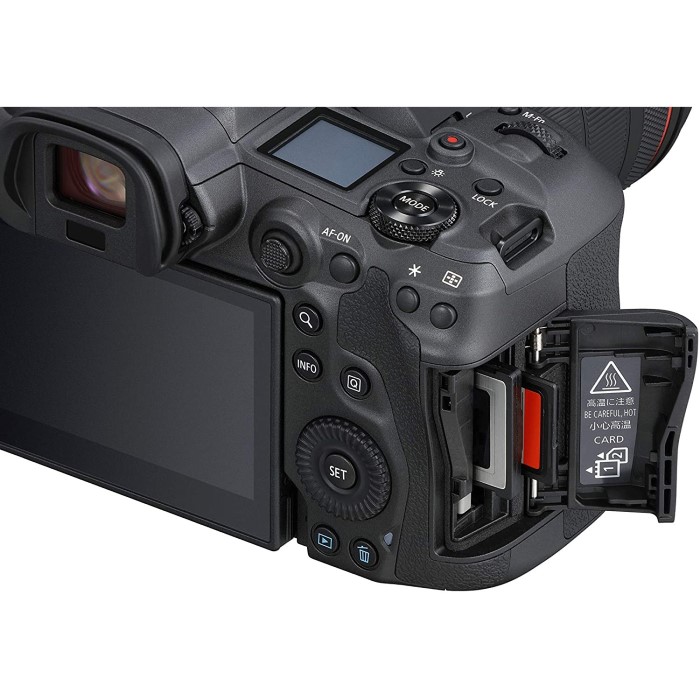
In terms of connectivity, the R5 is fully equipped. It features a full-size HDMI port. This is essential for connecting to external monitors and recorders. Many cameras use micro-HDMI ports which are fragile. The full-size port on the R5 is much more robust. Therefore, it can withstand the rigors of professional use. Also, the camera includes dual card slots. One slot is for high-speed CFexpress cards. The other is for standard SD cards.
Overcoming Heat and Power Challenges
When the canon eos r5 mirrorless camera was first released, there was significant discussion about overheating. The camera’s powerful 8K recording generates a lot of heat. Early firmware versions had strict recording limits. However, Canon has addressed these concerns aggressively. The company has released several firmware updates. These updates have substantially improved the camera’s performance. For example, the recording time limits for 8K and 4K High Frame Rate modes have been extended. Furthermore, the camera now allows users to disable the temperature warning. This enables them to keep shooting if they choose to. Although, this does require caution to prevent damage.
Moreover, there are physical ways to manage the heat. The camera body is designed to dissipate heat through its chassis. Many third-party accessories also help. There are heat sinks and cages designed to improve airflow. These accessories can significantly extend recording times. Therefore, for long interviews or events, these tools are recommended. Additionally, the camera has an official Canon fan accessory. This attaches to the back of the camera. It is powered by the camera’s battery or an external source. It actively cools the sensor compartment. Consequently, the camera can record indefinitely in many modes.
Power consumption is another consideration. High-performance processing requires energy. The R5 uses the LP-E6NH battery. It has a higher capacity than previous generations. However, for video work, one battery is rarely enough. Therefore, videographers should plan for power management. Using a USB-C power delivery adapter is a great solution. This allows for continuous power while shooting. It is perfect for studio setups.
The RF Lens Ecosystem Advantage
A camera system is only as good as its lenses. The Canon EOS R5 utilizes the RF lens mount. This mount has a large diameter and a short flange back distance. This design allows for innovative lens designs. Canon has released a stellar lineup of RF lenses. These lenses are optically superior to their older DSLR counterparts. They offer sharper images and better corner-to-corner sharpness. Consequently, the R5 can fully utilize its high-resolution sensor. The image quality is outstanding.
Furthermore, the RF lenses often feature advanced optical image stabilization. As mentioned earlier, this works with the camera’s IBIS. This combination provides unparalleled stability. Also, many RF lenses have a control ring. This ring can be customized to adjust various settings. Videographers often assign it to aperture or ISO control. This allows for silent adjustments while recording. You do not hear the click of a button. Therefore, audio recording remains clean. The control ring adds a tactile and intuitive layer to the shooting experience.
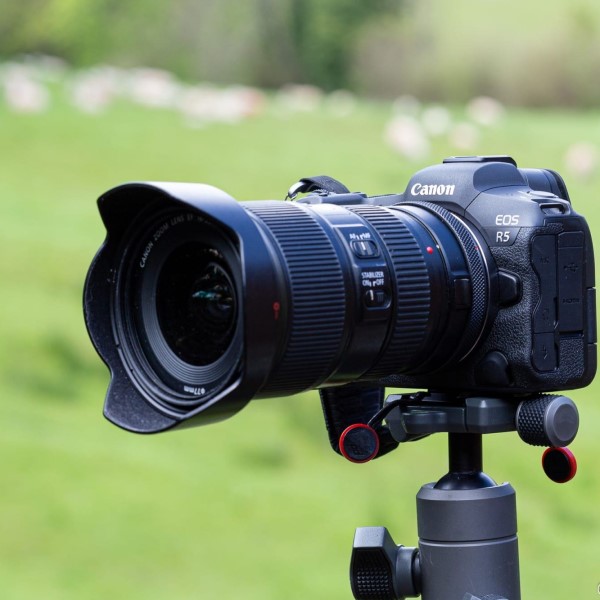
In addition, the RF mount is compatible with Canon’s extensive EF lens lineup. This is made possible through mount adapters. The adapters are compact and maintain full communication between the lens and camera. Autofocus speed and image stabilization work perfectly. This is a massive advantage for videographers who already own Canon DSLR lenses. They do not need to reinvest in an entirely new lens collection. They can use their trusted glass on the new body. Thus, the transition to the mirrorless system is seamless and cost-effective. The flexibility of the lens ecosystem makes the R5 incredibly versatile. Whether you need a fast prime for low light or a long zoom for wildlife, there is a solution. The optical quality elevates the video footage to a cinematic level.
Workflow and Codec Efficiency
High-resolution video creates large files. Managing these files is a critical part of the production process. The Canon EOS R5 offers a variety of recording formats. This caters to different workflow needs. For maximum quality, it records 8K RAW video internally. This format retains all the data from the sensor. It provides the ultimate flexibility for color grading and editing. However, RAW files are very large. They require fast, high-capacity CFexpress cards. These cards can be expensive. Therefore, they are typically reserved for high-end productions.
On the other hand, the camera also offers efficient compressed formats. It can record 4K video in MP4 format. These files are much smaller and easier to handle. They are suitable for online content or quick turnaround projects. Furthermore, the R5 supports H.265 encoding. This codec delivers high quality at lower bitrates. It saves storage space without sacrificing too much detail. Consequently, videographers can choose the format that best suits their project. They can balance quality with storage efficiency.
Moreover, the camera includes proxy recording capabilities. It can record a high-resolution file and a lower-resolution proxy file simultaneously. The proxy file is lightweight. It is easy to import into editing software. Editors can cut the project using the proxy files. The software then relinks to the high-resolution files for final export. This dramatically speeds up the post-production workflow. Additionally, the camera has built-in Wi-Fi and Ethernet connectivity. This allows for quick file transfers. It also supports FTP transfer. Thus, news and sports videographers can deliver footage rapidly. The R5 is not just a capture device; it is a complete workflow tool. It integrates smoothly into modern digital pipelines. This ensures that videographers spend less time managing data and more time creating content.
Frequently Asked Questions
Is the Canon R5 good for beginners?
The Canon R5 is a high-end professional camera. Consequently, it has a steep learning curve. It offers many complex features and customizable settings. A beginner might find the interface overwhelming. However, the auto modes are very effective. A dedicated beginner could certainly learn to use it. But it is a significant financial investment for a first camera. Therefore, it is generally recommended for advanced users or professionals.
Is the Canon EOS R5 a mirrorless camera?
Yes, the Canon EOS R5 is indeed a mirrorless camera. It uses a digital viewfinder rather than a mirror box. This allows for a more compact body design. It is part of Canon’s revolutionary R System. This system is designed specifically for the future of photography and videography. It features a cutting-edge sensor and advanced processor.
Is the Canon R5 considered a professional camera?
Absolutely, the Canon R5 is considered a professional camera. It offers specifications that meet the demands of professional photographers and videographers. These include 8K video, a high-resolution 45-megapixel sensor, and a rugged weather-sealed body. Many professional studios and production companies utilize this camera as a primary tool. It delivers results that meet industry standards.
What is the Canon R5 good for?
The Canon R5 is incredibly versatile. It is excellent for hybrid shooters who need both high-quality video and stills. It is perfect for wedding photography, wildlife videography, and studio portraits. The 8K video capabilities make it a leader in cinematic production. The fast autofocus makes it ideal for sports and action photography. In short, it is good for almost any professional imaging task.
Conclusion
The landscape of digital imaging is constantly evolving. Videographers demand tools that offer both quality and versatility. The Canon EOS R5 mirrorless camera answers this call with authority. It combines high-resolution stills with cinema-grade video capabilities. The inclusion of 8K recording is a defining feature. It future-proofs the camera for years to come. Furthermore, the advanced autofocus system ensures sharp results every time. The stabilization technology allows for creative freedom without the bulk of gimbals.
Moreover, the robust design and extensive lens ecosystem make it a reliable workhorse. While heat management was an initial concern, firmware updates have mitigated these issues. The camera is now more capable than ever. It empowers creators to tell their stories with unprecedented clarity. Whether you are a seasoned professional or an ambitious enthusiast, this camera delivers. It removes technical barriers. It allows the artist to focus on the craft. Therefore, the R5 is more than just a piece of equipment. It is a gateway to new creative possibilities. For videographers looking to elevate their work, this camera is an exceptional choice. It truly represents the pinnacle of current mirrorless technology.